


Why Being Heard Matters After Cancer
Have you ever walked out of an appointment feeling like you said everything and nobody caught a word of it? If you’ve faced a scary diagnosis, that feeling can hit hard. And if you’re a woman, odds are good you’ve had it at least once.
This October, in honor of Breast Cancer Awareness Month, I sat down with Dr. Jess Bunin for Gratitude Geek episode 344. She’s a three-time cancer survivor, a West Point graduate, a retired Army colonel, and a physician trained in both psychiatry and internal medicine.
She’s also the author of Self-Awareness and Trust, Leading Healthcare Teams from the Inside Out. Our conversation covered a lot of ground, so I pulled out five takeaways worth spotlighting.
Key Takeaways
In this episode, you’ll learn:
- A clear mammogram doesn’t always mean a clear picture
- Doctors may cut you off in 11 seconds
- Your best resource may be a woman who’s been there
- “Why me” can turn into “she’s my why”
- PTSD isn’t just for combat veterans
This episode shares one woman’s story and isn’t medical advice. Please talk with your own care team about your own situation.
Video not loading? Click here to watch on YouTube.
A clear mammogram doesn’t always mean a clear picture
Jess had good reasons to be vigilant. She’d already had radiation for an earlier cancer, and she’d been exposed to burn pits during deployments to Iraq and Afghanistan. So she got a mammogram or MRI every six months.
When a call came asking her to return for a biopsy, the mammogram didn’t show a mass. Neither did the ultrasound. Only an MRI-guided biopsy found it.
As a 12+ year cancer patient, that story did not surprised me. However, many of us assume the mammogram is the final word. Jess wants high-risk women to know that the right screening for you may look different than the standard.
Ask your doctor what makes sense for your history, and don’t be shy about it.
Doctors may cut you off in 11 seconds
After her diagnosis, Jess chose a bilateral mastectomy with no reconstruction. Her surgeon pushed back, and he even wanted her to talk with a therapist again before moving forward.
She was clear about what she wanted, and she’s a physician, yet she still didn’t feel heard. She told me about a study showing that doctors interrupt patients in as little as 11 seconds.
“The person who knows their body, who knows what they’re going through, we cut off in 11 seconds.” – Jess Bunin, MD
If a physician can feel dismissed, what chance does everyone else have? Jess’s advice for the rest of us is simple and a little fierce.
Your care team will be with you for this treatment, and then they’ll move on. You’ll be with yourself forever, so keep asking for what you know is right for you.
Your best resource may be a woman who’s been there
Jess got through her mastectomy recovery largely because a friend had been through the same surgery. That friend told her exactly what to have at home, like pillows to prop up her bed and shirts and belts to hold her drains.
Nobody hands you that kind of practical wisdom in a brochure.
Jess was also blunt about where not to look. Patients keep showing up convinced they have something because AI told them so, and one of her friends spent a whole weekend in the ER over a pulled back muscle.
I felt this one personally. I wish I’d had a clearer picture of how my body would change years down the road before I made my own surgical choices.
“Talk to people who have been through it. Talk to your physicians.” – Jess Bunin, MD
Keep a running list of questions, too. You’ll thank yourself later.
“Why me” can turn into “she’s my why”
Jess wasn’t grateful during her cancer treatment, and she told me so. After Hodgkin’s disease and a divorce, she fell into a deep depression and wondered if she’d ever be a good doctor.
Then, during a late night psychiatry rotation, she was called to the ER to evaluate a woman refusing treatment for brain metastases.
Jess didn’t ask a single question at first. She put her hand on the woman’s hand, and they both cried.
Eventually she learned that no one had really explained the diagnosis, and the woman’s biggest worry was her cat at home alone. Jess promised to find someone to check on the cat, and the woman agreed to stay and start treatment.
“Oh, this is why me? Like, she’s my why.” – Jess Bunin, MD
I love this because it doesn’t wrap suffering in a bow. Jess didn’t find meaning right away. She found it by showing up for someone else, and that compassion became her purpose as a physician.
PTSD isn’t just for combat veterans
Jess pointed out that most of us think PTSD only belongs to combat soldiers or survivors of childhood abuse. In reality, one significant trauma can do it, including a life-threatening illness or a stay in the ICU.
She believes every person diagnosed with cancer should be asked about depression and PTSD automatically, instead of being left to figure out why they’re waking up in cold sweats.
I got honest with Jess about my own struggle with anger after my diagnosis. I didn’t need a quick prescription so much as someone to listen for a while. Jess recommended two books by Rana Awdish, and she summed up why they matter.
“Healing isn’t done when your body’s ready to walk again.” – Jess Bunin, MD
Mental health care isn’t an add-on to cancer care. It’s part of how you recover.
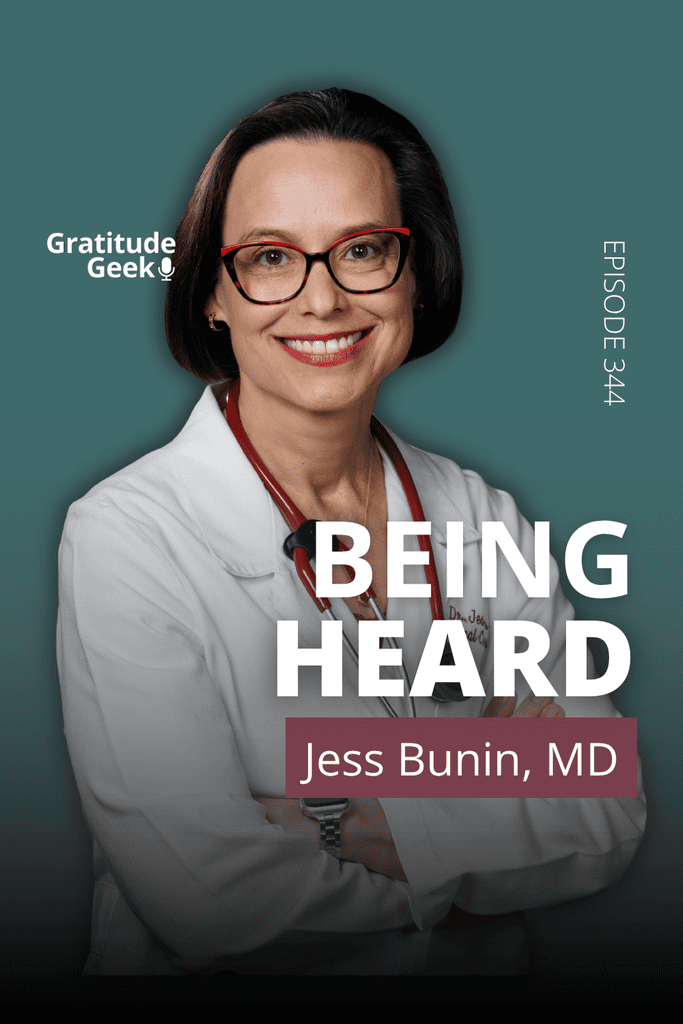
Meet Jess Bunin, MD
Jess Bunin, MD is a three-time cancer survivor, West Point graduate, and retired Army colonel with 23 years of service. Trained in both psychiatry and internal medicine, she is the author of Self-Awareness and Trust, Leading Healthcare Teams from the Inside Out, a book that blends memoir with practical leadership lessons for anyone who works on a team. She lives with her
Disclaimer: Some links may be affiliate links, meaning I may earn a small commission if you choose to purchase. No added cost to you.
Connect with [Guest Name]
- Website: https://jessbuninmd.com
- Free self-awareness worksheet: https://lead.jessbuninmd.com/
- LinkedIn: : https://www.linkedin.com/in/jessica-bunin/
- Book: Self-Awareness and Trust: Leading Healthcare Teams from the Inside Out
also Mentioned
- In Shock: My Journey from Death to Recovery and the Redemptive Power of Hope by Dr. Rana Awdish
- After Shock: Learning to Reinhabit My Body After Illness by Dr. Rana Awdish
A Final Thought on Gratitude
Because this is Gratitude Geek, I had to ask how Jess weaves self-awareness together with gratitude. Her answer is that if we can’t give ourselves grace and know when to say no, we don’t even open our minds to the idea that gratitude is possible.
She admits she couldn’t practice gratitude during her diagnosis, and that’s okay. These days she records a Thankful Thursday video every week, and she’s grateful for her wife, her pit bulls, and yes, never needing to buy another bra.
So here’s a question to carry into your week. Where could you give yourself a little grace first, so gratitude has room to show up?
Stay Groovy!

Gratitude Geek Podcast is made possible by:
Heartbeat.chat, MacKenzie Circle, Goddess Approach, Marketing Podcast Network, HoneyBook, SendOutCards, The Super Patch Co., Podmatch
and listeners like you.

Leave a Reply