
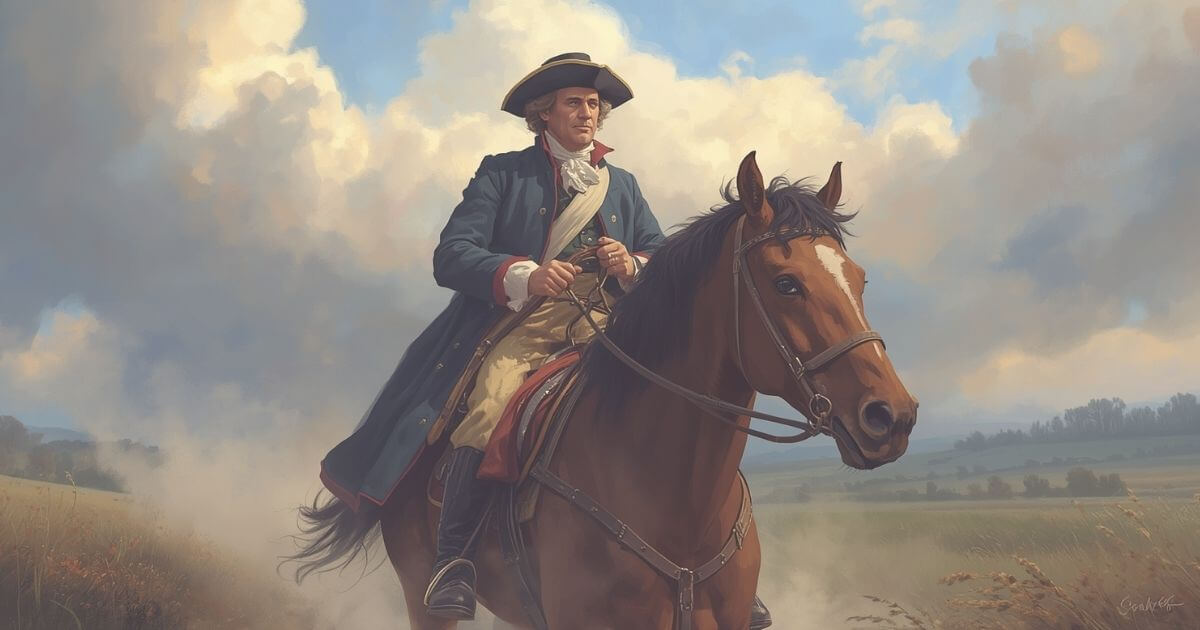

Today, July 4, 2026, America turns 250. Given the current state of our democracy, I don’t feel much like celebrating.
However, I do find myself reflecting on the founding of this country. And, I keep coming back to one guy who didn’t get nearly enough credit for making any of it possible.
His name was Paul Revere. And he had something most people spend their whole careers chasing.
Note: I originally delivered this piece over a decade ago as a Toastmasters speech. I figured its high time to revitalize it.
The Night That Changed Everything
On the morning of April 18, 1775, a young stable boy in Boston overheard two British officers talking about “hell to pay tomorrow.” He scurried off to the shop of Paul Revere, a silversmith by trade, and repeated the whole thing. More information was quietly gathered throughout the day, and by that evening the picture was clear.
The British regulars were marching on Concord, Massachusetts, where a cache of weapons was hidden. They also planned to arrest John Hancock and Samuel Adams along the way.
Long before John Hancock became synonymous with life insurance and interchangeable with the word “signature,” and long before Samuel Adams became a craft beer brand, the two men were Revolutionary leaders. Along with Revere and others, they organized the Boston Tea Party. Arresting them would be a serious blow to the cause.
By 9 pm it was decided. Revere and William Dawes would head in different directions to raise the militia and meet in Lexington to warn Adams and Hancock, who were spending the night with Hancock’s relatives.
Here’s What You Probably Got Wrong
Contrary to what most of us were taught, Paul Revere did not ride through the countryside shouting “The British are coming! The British are coming!”
For one thing, Revere considered himself British. For another, British soldiers were everywhere. Getting caught before completing his mission was the last thing he needed.
What Revere actually did was quietly knock on doors, deliver his warning, and move on. Along the way, he roused at least 40 other riders to spread the word. By the time he reached Lexington at midnight, militia units as far as 40 miles away were already mobilizing toward Concord.
William Dawes arrived shortly after midnight having roused only a few dozen militiamen.
Same night. Same mission. Wildly different results.
Why Revere Succeeded When Dawes Didn’t
Malcolm Gladwell wrote about this in The Tipping Point (affiliate) and it’s still one of the most useful frameworks I’ve come across. Revere was what Gladwell called a “Connector,” someone who genuinely knew people across many different circles and who those people trusted enough to open the door for at midnight.
Revere was a merchant. A silversmith. A community fixture. He wasn’t a stranger knocking in the dark. He was someone people knew, someone they’d done business with, someone they’d shown up for before that night ever happened.
Dawes didn’t have those relationships in that territory. He was perfectly capable, but when it mattered most, that gap showed up.
This isn’t just a history lesson. This is relationship marketing, 250 years before anyone called it that.
Personality Goes a Long Way
If you’ve seen Pulp Fiction (it’s a classic at this point, go watch it), there’s a scene where Samuel L. Jackson explains to John Travolta why you can eat a pig but not a dog. His point comes down to one thing.
“Dogs have personality. Personality goes a long way.”
Paul Revere had personality. He also had something even harder to build, and that’s genuine trust earned over time. When he knocked, people answered. When he warned them, they believed him. When he needed them to act, they did.
I’ve talked about this on Gratitude Geek podcast a lot. In episode 110, Terry Begue broke down exactly how people skills — not advertising, not cold outreach — built his business over 40 years. Terry’s whole approach was about showing up for people consistently, the same way Revere did.
And in episode 205, Lisa Robbin Young talked about what she calls “strong energy” — the idea that when you’re authentically yourself, you naturally draw the right people toward you. That energy is what makes people open the door. Literally, in Revere’s case.
That’s not some soft, feel-good concept. That’s gratitude as a strategy. Every time Revere showed up for someone before he needed anything, he was making a deposit. The night of April 18th, he made the withdrawal.
What This Means for Your Business
I’ve spent 30+ years in marketing, and I’ve watched a whole lot of people try to shortcut what Revere built. They blast out cold emails, run ads to strangers, and wonder why nobody’s opening the door.
And this is exactly what episode 206 guest Tommy Wyatt was getting at when we talked about developing a magnetic personality. Tommy’s point — and Revere’s whole story — is that magnetism isn’t a trick. It’s the accumulated result of being genuinely present, genuinely interested, and genuinely trustworthy over time. You don’t manufacture it. You earn it.
Here’s the thing though. A lot of the women I work with feel like they’re starting from scratch. Maybe you’ve been through cancer, a divorce, or a loss that knocked your business sideways. You look up and your network feels thin, your confidence is shaky, and the idea of “putting yourself out there” sounds exhausting.
Revere had 40 years of relationship-building behind him before that night. You don’t need 40 years. You need a community where you can start building the real thing, one genuine connection at a time.
Revere didn’t go wide. He went deep. He spent years being a person worth knowing before he ever needed anything from anyone. And when the moment came, his network showed up.
That’s the whole thing, y’all. Build the relationships before you need them. Show up consistently. Be someone people are genuinely glad to hear from. Not because it’s a tactic. Because it’s the right way to do business, and because those relationships will carry you when everything else gets hard.
The Rest of the Story
After meeting with Adams and Hancock in Lexington, Revere, Dawes, and a Dr. Samuel Prescott (who history notes was “returning from a lady friend’s house at the awkward hour of 1 am”) pressed on toward Concord.
A British patrol stopped all three. Prescott and Dawes escaped. Dawes fell from his horse during the chaos, but Prescott made it to Concord with the warning.
Revere was held at gunpoint.
He calmly told the British soldiers that if they approached Lexington, they’d be met by a large hostile militia. When shots rang out in the distance, the officer demanded an explanation. Revere helpfully noted it was a signal to “alarm the countryside.” When bells started ringing in Lexington, he told them they were all dead men.
The British soldiers decided Lexington wasn’t worth it. They freed Revere and turned back.
Lexington was spared that morning. Concord was not. The American Revolution had begun.
Two hundred and fifty years later, we’re still talking about Paul Revere. Not William Dawes.
Build the relationships. Do it before you need them. Do it with gratitude, with consistency, and with genuine care. That’s not a marketing strategy. That’s a life strategy.
And if you’re ready to stop building alone, that’s exactly what we do inside the Gratitude Geek Lab. Women who’ve been through the hard stuff, rebuilding something real, together. Come find your people.


Leave a Reply