
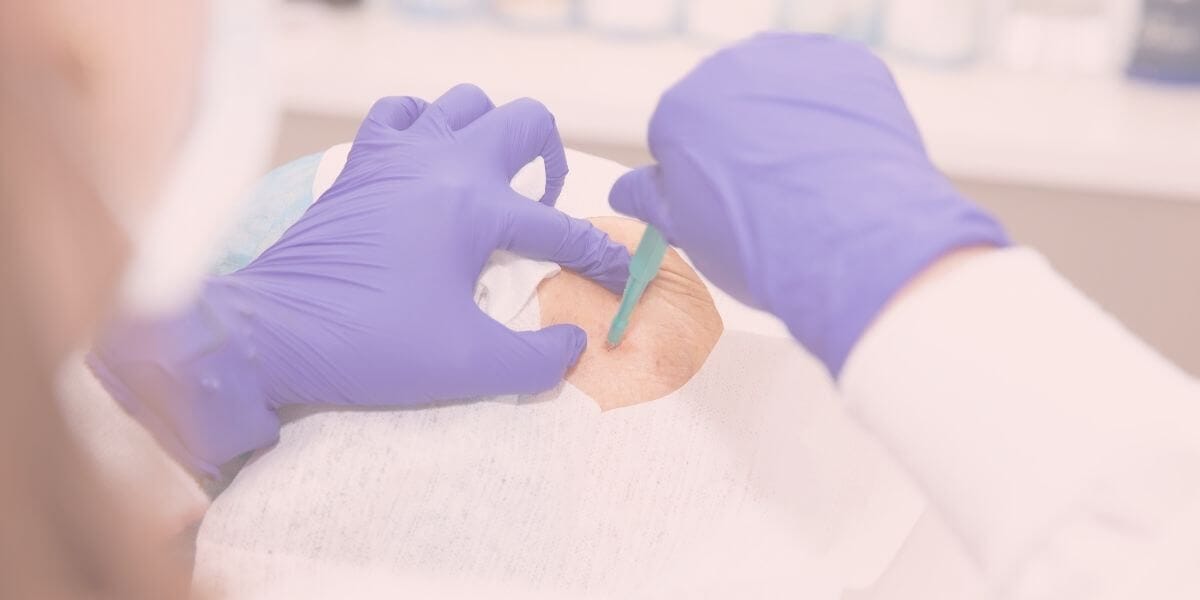

In 2015, right after my own lung biopsy, I recorded a video explaining what actually happens during the procedure.
That video has been viewed over 33,000 times, and I think I know why.
When you’re told you need a lung biopsy, you’re scared. You’re searching for answers. You want to know what’s going to happen to you. And most medical descriptions don’t quite capture what it’s really like.
This was the procedure that changed everything for me. I went in about two months after finishing my Herceptin infusions, thinking I was done with active treatment. A PET scan showed a small but “very hot” nodule on my left lung. Based on my history with HER2-positive, ER-positive breast cancer, we needed to know what we were dealing with.
Watch

Video not loading? Click here to watch on YouTube.
The Procedure: What Actually Happens
Here’s what you need to know if you’re facing a lung biopsy:
You’ll be awake. This isn’t done under general anesthesia. You’ll get excellent drugs—muscle relaxers, anti-anxiety medication, maybe morphine—but you’ll be conscious throughout.
You’ll be on a CT scan table, face down. And you cannot move. This is crucial. Any movement could be dangerous.
A needle goes through your back into your lung. The interventional radiologist inserts a needle through your skin and into your lung tissue, using the CT scan to guide them to the nodule. You’ll be asked to take deep breaths and hold them while the needle is moved and positioned.
It can take a while. My procedure took 30-45 minutes because the nodule was small and in a difficult location. You might be on that table for 15-20 minutes or longer, depending on where the nodule is located.
You can’t leave until the lab approves the sample. Even after they get the biopsy, you stay on that table until the lab technician confirms they have a viable sample.
The Risk: Lung Collapse
There’s a real possibility your lung could collapse from the puncture. Mine did—the upper lobe collapsed after the procedure.
They’ll take X-rays immediately after to check your lungs. If there’s a collapse, you’ll be monitored in the hospital. This could mean anywhere from an hour to two days of observation.
The Part They Don’t Warn You About
When my lung re-inflated, I experienced the most intense pain I’ve ever felt. I was sitting in the outpatient room with my husband when the blood pressure cuff went off on my arm, and suddenly I couldn’t speak. I grabbed the arms of the hospital bed and tried to breathe through it—Lamaze breathing, yoga breathing, anything.
The pain was my lung re-inflating. If your lung collapses during this procedure, know that when it re-inflates, it’s not going to be pleasant. But it passes.
The Results That Changed Everything
My results came back positive for metastatic breast cancer. What I thought was the end of my treatment journey was actually just the beginning of a new chapter—one I’m still living ten years later.
I’ve been on Herceptin infusions every three weeks since then. Daily anastrozole. Zometa every six months for bone strength. Long-term treatment means long-term side effects: brain fog, neuropathy, spinal degeneration.
But I’d rather know than wait. That biopsy, as difficult as it was, gave me information I needed.
If You’re Facing This
The procedure is 30-45 minutes of your life. You’ll get really good drugs. You’ll need to stay very still and breathe when they tell you to breathe. It’s uncomfortable, it’s scary, but it’s manageable.
And most importantly: the information you get from this biopsy is worth the discomfort. Whatever the results are, knowing allows you to make decisions and move forward.
Take a deep breath. You can do this.
This post is part of my Beyond Cancer series—living with metastatic breast cancer since 2014. The raw, real, and sometimes ridiculous journey. This article is not intended as a substitute for medical advice. Always consult with your physician regarding any symptoms or treatment concerns.
Stay Groovy!


Leave a Reply